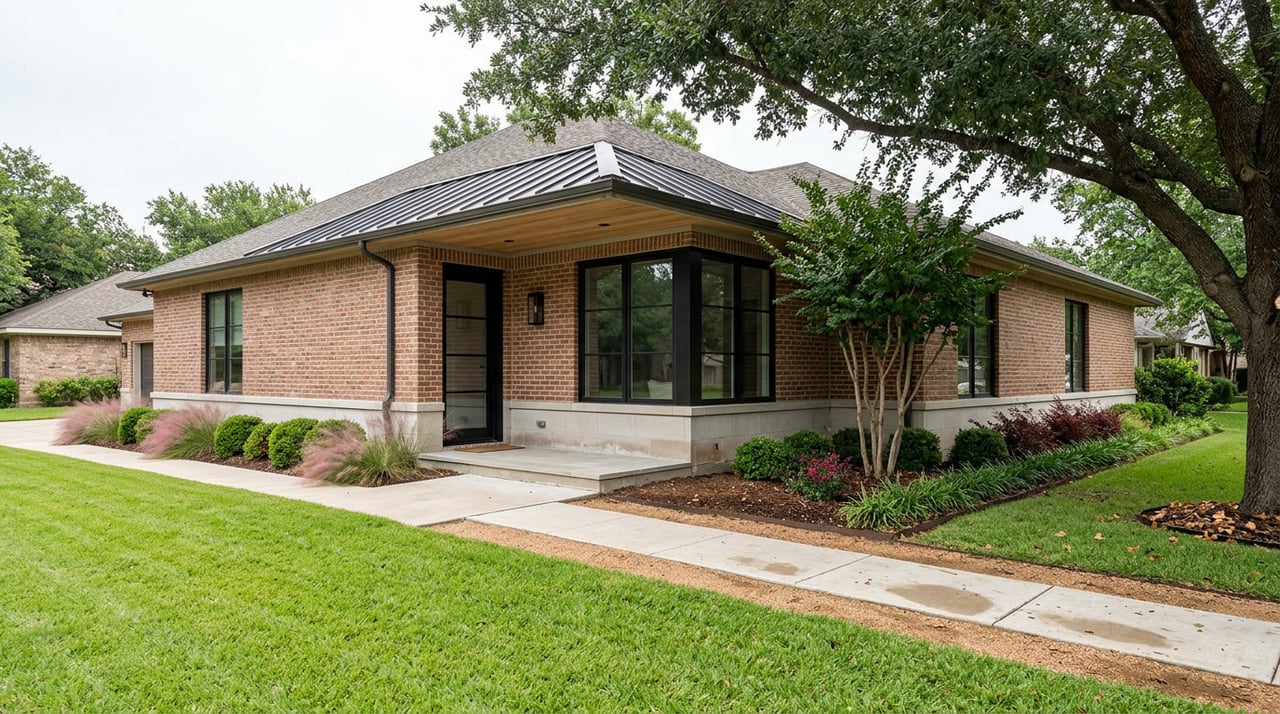
The 30-Day Rule That Can Sink a Ridgeland Short-Term Rental Purchase
September 17, 2026
Ridgeland has had a hard rule on nightly and weekly rentals for years, and the city has said, more than once, that it has no plans to change it. Meanwhile, the short-term rental market inside city limits grew by a third in a single year. Both things are true at once, and if you're buying a house in Ridgeland with an Airbnb spreadsheet already open, the gap between those two facts is exactly what you need to understand before you write an offer.
Ridgeland's rental rule isn't buried in a zoning appendix somewhere. It's written directly into the city's Residential Rental Inspection Code, in a section that leaves almost no room for interpretation:
Any occupancy of such Dwelling Unit must be for a period of greater than thirty days. A Short-term Rental License is required for the rental of any Dwelling Unit for a period of less than three months.
Read that twice, because the two sentences do different jobs. The first one is a floor: an occupancy must be longer than 30 days, period. The second sentence covers the space above 30 days and below three months, where a rental is technically legal but only with a license issued by the Mayor and Board of Aldermen, not a form you fill out online.
This isn't a new posture the city just adopted. When the idea of loosening the rule came up at a city work session, Ridgeland's Director of Community Development told a local paper plainly that the board's position hadn't changed and that he didn't see any interest from the Mayor and Board in spending time on the matter. That's a city on record saying the rule is settled, not under review.
Here's the part that should slow down anyone running Airbnb numbers on a Ridgeland property. As of June 2026, market data from AirDNA counted 33 active short-term rental listings operating inside Ridgeland, pulling in an average of $17,400 in revenue over the trailing twelve months, with occupancy at 54 percent and an average daily rate of $139. Revenue per listing was up 33.6 percent from the year before. Active listings were up 6.5 percent.
Search the platforms yourself and you'll find stays clustered in recognizable Ridgeland subdivisions, places like Natchez Trace Village, Sandalwood, and Wright's Mill. These aren't obscure corners of the county. They're established residential neighborhoods sitting inside a city that requires stays to be longer than 30 days.
That growth is the number worth sitting with. It doesn't mean the nightly rental model has quietly become legal in Ridgeland. It means demand for short stays near the reservoir and the Natchez Trace corridor is real and growing, and a portion of that demand is currently being met by properties operating outside, or right up against the edge of, a rule the city has said it isn't revisiting. Growth in an unlicensed segment isn't proof the segment is safe. It's a sign the exposure is compounding for whoever eventually gets flagged.
The confusion for most buyers comes from treating "short-term rental" as one category. Ridgeland's code sets out the requirements for these stays:
| Length of stay | Status under Ridgeland's code | What's required |
|---|---|---|
| 30 days or fewer | Prohibited outright | Not legal regardless of licensing |
| More than 30 days and less than three months | Allowed, but regulated | Short-Term Rental License from Mayor and Board of Aldermen, plus inspection before each re-occupancy |
That middle row is where most of the confusion lives. A rental for more than 30 days and less than three months is legal, but it isn't a listing you activate on a booking app and manage remotely. It requires a license tied to the specific property, an inspection before every new occupant moves in, with a filing fee attached to that inspection, and coordination with the city's utility and property maintenance rules. It's a small operation with real paperwork, not a passive income stream.
Ridgeland's code enforcement isn't proactive sweeps through neighborhoods looking for Airbnb listings. The City of Ridgeland's Codes and Enforcement FAQ says it's complaint-driven. Someone, usually a neighbor, reports the address to the city's Code Enforcement Division.
That process explains why 33 listings can operate for a while without incident. It also means the risk isn't evenly distributed. A property that draws noise complaints, parking disputes, or a report to code enforcement may face greater enforcement exposure than one that doesn't. You can't underwrite a rental strategy around hoping nobody complains.
Ridgeland's lodging landscape also includes a larger-scale project: In July 2026, the Madison County Board of Supervisors approved an urban renewal plan clearing the way for a 250-room resort-style conference center and hotel in Ridgeland, with the developer directing close to $18.9 million in tourism rebate proceeds back to the county.
If a listing agent or a seller frames a Ridgeland house as an Airbnb opportunity, ask a direct question before you get attached to the numbers: is this property currently licensed?
If the answer is no license exists, treat any nightly-rental income projection as unenforceable until you've confirmed a path to the license for stays longer than 30 days and less than three months. Lenders underwriting an investment purchase generally want to see durable, documented income, and unlicensed nightly revenue with no paper trail behind it isn't the kind of number an appraiser or a bank is going to lean on.
If you've been running a property as a nightly or weekly rental without a license, that history is worth surfacing early rather than letting a buyer's agent find it during due diligence. A pattern of unlicensed short-term use, especially one that generated a neighbor complaint or a Notice of Violation at some point, is the kind of thing that changes how a buyer reads the rest of the file. Getting ahead of it, with a clear explanation of what the property is licensed for today, tends to go over better than having it surface as a surprise during the option period.
Even a fully licensed rental for more than 30 days and less than three months under city code doesn't clear every hurdle. Many Ridgeland subdivisions carry their own restrictive covenants, and the city's own code enforcement staff have been clear that they can't enforce those covenants because they only apply to city ordinances. Ridgeland's own guidance on this notes that in many cases, subdivision covenants are more restrictive than the underlying city code. A rental that's perfectly legal under the RRIC can still violate a homeowners association's recorded rules, and that's a private dispute the city won't step in to referee. Before you count on rental income from a specific address, check the subdivision's covenants, not just the city ordinance.
Can I legally run a rental for more than 30 days and less than three months in any Ridgeland neighborhood? Only if you obtain the license from the Mayor and Board of Aldermen. The license is property-specific and requires inspection before each new occupant moves in, so budget time and a fee for that step, and confirm the subdivision's own covenants don't prohibit it separately.
What if I only want to rent it out a handful of weekends a year, not run it as a business? The requirement that stays be longer than 30 days doesn't have a carve-out for occasional use. A single weekend rental, even once, falls under the same rule that prohibits any stay of 30 days or less.
What actually triggers a code enforcement case? Almost always a complaint from a neighbor or someone in the community, not a routine city inspection. That's why some unlicensed rentals operate for a long stretch before anything happens, and why the risk depends heavily on how a given property fits into its street, not just on the fact that a listing exists.
If you're weighing a Ridgeland property as an income-producing purchase, or you're sitting on one that's been quietly doing double duty as a vacation rental, this is exactly the kind of local detail worth working through before it becomes a problem at the closing table. Renee Grimes has spent two decades coordinating the parts of a Rankin County and Jackson metro transaction that don't show up on a listing sheet. Call or text Renee for a local market consultation before you build your numbers around a rental status the city hasn't actually granted.
This article is general information, not legal, tax or financial advice. Consult a qualified professional about your situation.

Discover why buyers and sellers trust Renee Grimes for expert real estate guidance. With over 20 years of experience, she ensures a seamless, personalized experience.